
Connecting a new restaurant website to an existing backend
Food & Liquor Central illustrates the frontend, CMS and supplier-integration decisions behind a connected restaurant system.
The useful answer
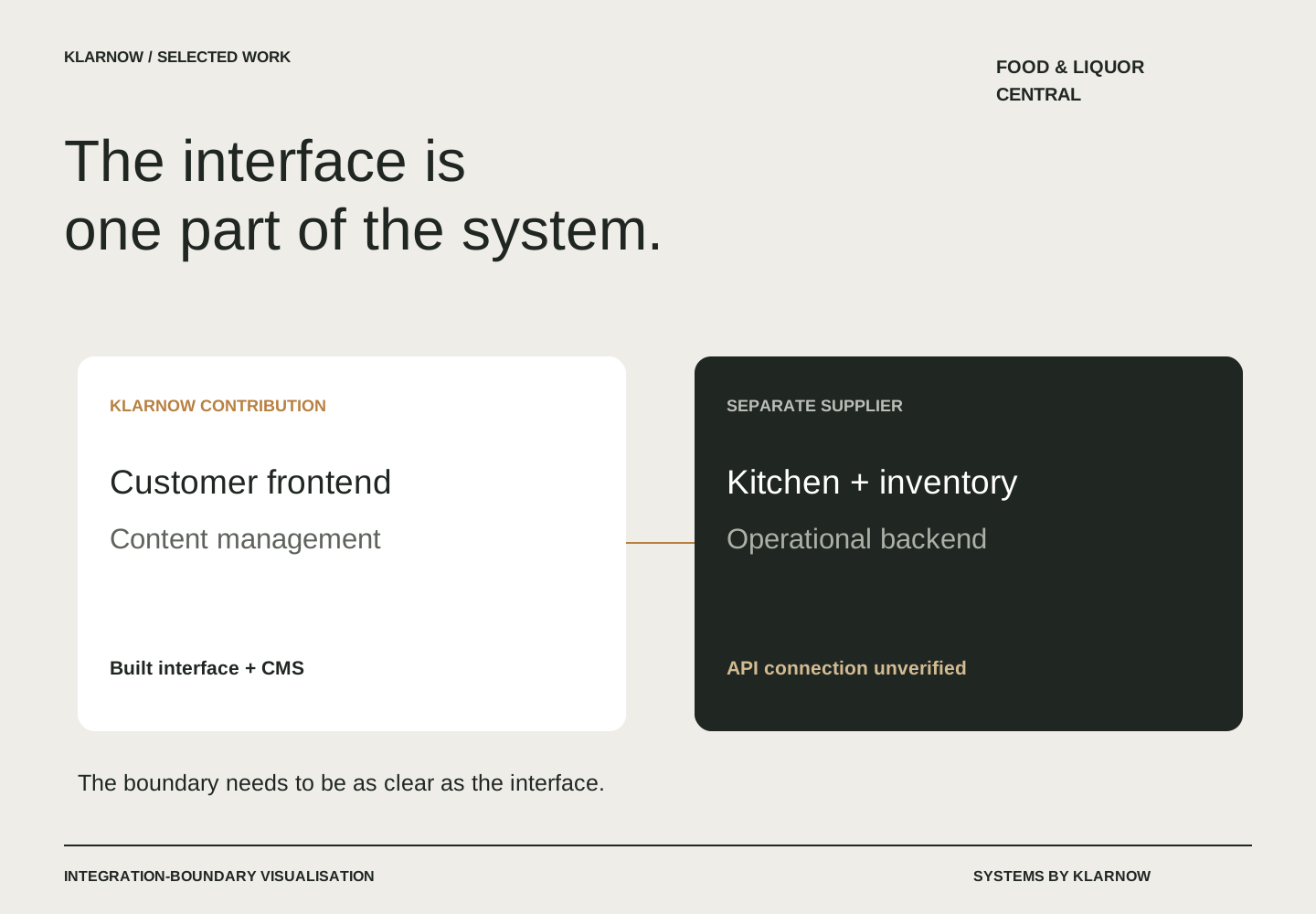
A new restaurant interface needs an agreed handoff with the software that runs the operation. Food & Liquor Central’s case concerns Klarnow’s frontend redesign and CMS work around a supplier-built kitchen and inventory backend. The API integration remained unverified.
The interface is one part of the system
A customer may see one website, while several teams and systems sit behind it. Content, product information, kitchen handling and inventory can have different owners. A redesign becomes more complex when the public interface depends on data and actions supplied by another developer’s backend.
The Food & Liquor Central work made that boundary central to the delivery question. The commercial opportunity was to improve the customer experience while understanding how it would fit the existing operation. A visual redesign alone could not establish that the operational connection was complete.
Klarnow’s role and the delivery boundary
Klarnow’s contribution was frontend redesign and CMS work. A separate supplier built the kitchen and inventory backend. The September 2026 review records an unresolved decision about API-integration ownership. Keeping these responsibilities clear is essential to a fair account of the project.
The available record supports frontend work and integration planning. It does not establish original backend authorship, a completed API connection, deployment acceptance or a measured operational saving. This case is therefore a delivery lesson about connecting systems, rather than a claim that the full restaurant operation was launched.
Agree the handoff before promising the outcome
For a business in this position, the useful questions are concrete. Which system provides the information shown to customers? Which team implements the connection? What should happen when an item changes or a request fails? Who is responsible for accepting the end-to-end result?
These are recommended planning questions, not additional features claimed for this project. They turn an abstract request to integrate the website into a set of responsibilities and acceptance checks. Without that agreement, two suppliers can each complete a local task while the business still lacks a working journey between them.
A practical way to review a connected release
Take one representative customer action and trace it through the interface, the connection and the operating system. Confirm the expected information at each step, the person who can investigate a failure and the evidence required to sign it off. Review an unsuccessful attempt as well as the intended path.
Food & Liquor Central demonstrates why integration ownership belongs in the brief, not only in the final technical discussion. A CMS can make content easier to manage and a frontend can make a service easier to use. Becoming a dependable connected operation still requires the supplier handoff to be implemented and verified.
The documented position
The September project review records frontend work and an unresolved API-integration ownership decision.
No claim of original backend authorship, completed API integration, deployment acceptance or measured operational savings.
Source basis: project review, 28 September 2026.
What to take from this
When more than one supplier is involved, agree who owns the connection and who accepts the complete journey before treating the interface as the finished system.