
Designing QR membership check-in around the staff decision
What Klarnow’s Roots staging prototype teaches about QR member lookup, staff decisions and testing the paths beyond a successful scan.
The useful answer
A QR membership journey needs to help staff make a clear decision after the scan. The Roots prototype explored member lookup and a staff-facing response. Its incomplete non-member path also shows why a successful demonstration is only one part of a dependable release.
Start with the moment of use
A membership programme can look complete when viewed as a collection of features: a registration page, a digital pass and a member record. At the door, however, the user is a member of staff trying to understand one person’s status and choose the next action. That moment is the interface’s real test.
The Roots work focused on this practical question. Staff needed a way to identify a member and decide what should happen during the visit. The opportunity was to make a decision easier to carry out, rather than adding technology without a defined operating purpose.
What the prototype demonstrated
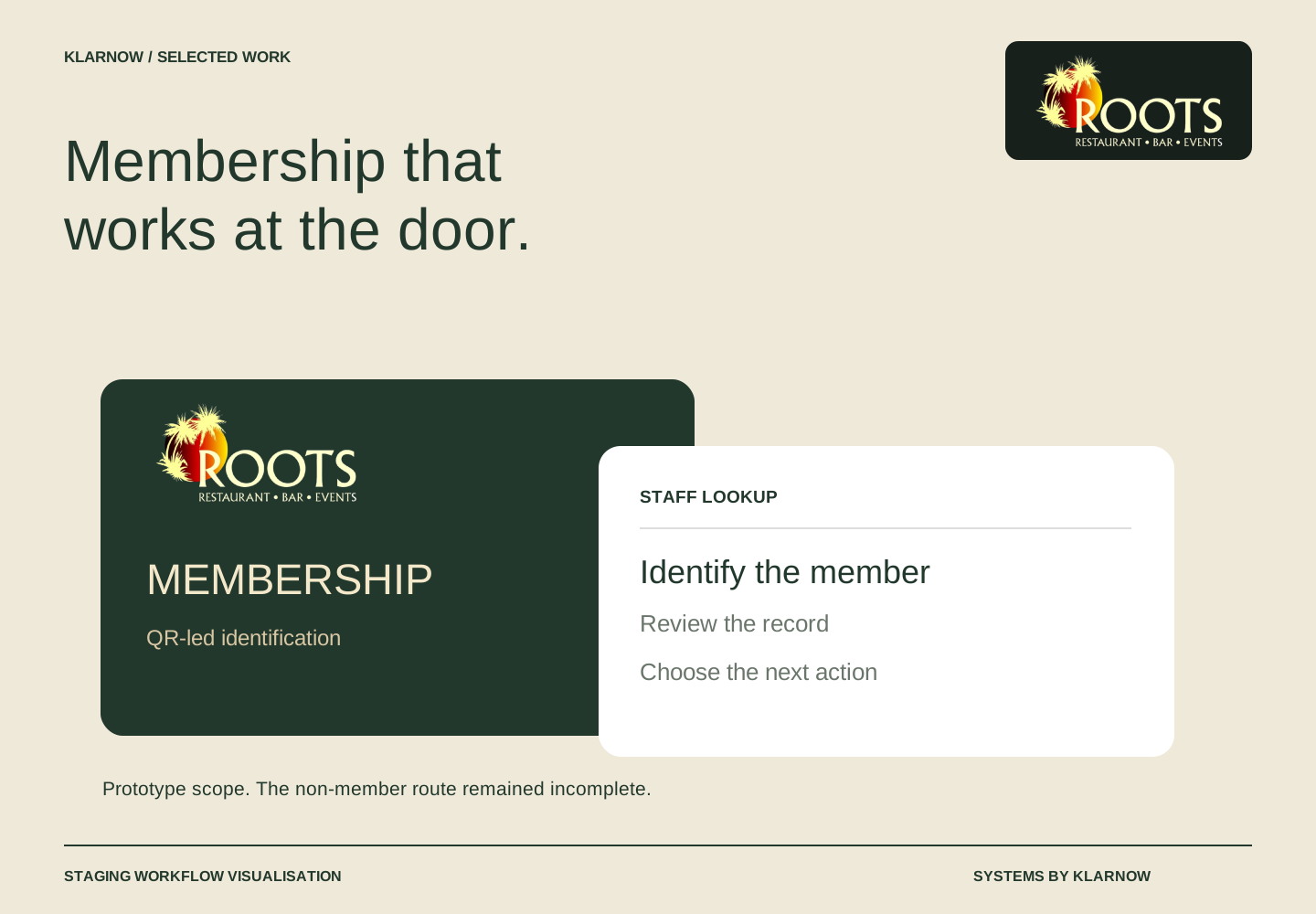
Klarnow developed a staging prototype exploring QR-led member lookup and the staff experience around identification. The 1 October 2026 review documents the member route. The non-member route was still incomplete, which is material to the story rather than a detail to hide.
This is a prototype case, not a production-adoption claim. The reviewed evidence does not establish live usage, NFC delivery or a completed route for every kind of visitor. Presenting the work at its actual stage allows another business owner to understand both the design thinking and the remaining delivery decisions.
Design the exception alongside the happy path
For a similar membership project, the next useful questions concern the unsuccessful journeys. What should staff see if no member is found? Who can resolve a disputed status? What should happen if a visitor has no usable pass? These are proposed acceptance questions, not a claim that the Roots prototype already answers them.
The same applies to the information on screen. Staff need sufficient context to carry out their role, with a clear next action and an appropriate access level. A scan that returns a database record is a technical event. A screen that supports a clear staff decision is an operational design outcome.
What this means before launch
Prototype review should establish which routes have been demonstrated, which remain incomplete and who accepts each one. A useful walkthrough includes a member, a non-member, a missing record and a staff user needing help. The purpose is to discover whether the workflow is understandable under ordinary service conditions.
Roots demonstrates the value of testing the moment of use before widening the feature list. The prototype made the member-lookup idea tangible and exposed an incomplete path. For a business planning membership software, that is a useful stage of learning, provided it stays distinct from a claim of a fully operating membership system.
The documented position
The October demonstration documents member lookup. The non-member path remained incomplete.
The demonstrated member route does not establish completed non-member handling, NFC integration or live usage.
Source basis: staging demonstration review, 1 October 2026.
What to take from this
Build the decision after the scan. Then test the visitor who does not fit the expected path before calling the system complete.